“Eco-Friendly” Labels Made Me More Careful
Do you hear the word greenwashing often now? I do, and for a long time, I thought it was something distant, something that applied to big corporations or abstract marketing strategies that did not really affect my daily life. I believed that as long as I tried to buy “eco-friendly” products, I was doing my…
Do you hear the word greenwashing often now? I do, and for a long time, I thought it was something distant, something that applied to big corporations or abstract marketing strategies that did not really affect my daily life.
I believed that as long as I tried to buy “eco-friendly” products, I was doing my part, even if I did not fully understand what those labels meant.
That belief slowly unraveled, not because I read one shocking article or watched a documentary, but because of very ordinary moments in supermarkets, pharmacies, and online stores.
I began noticing how often the word sustainable was used without substance.
The First Time I Felt Confused Instead of Reassured
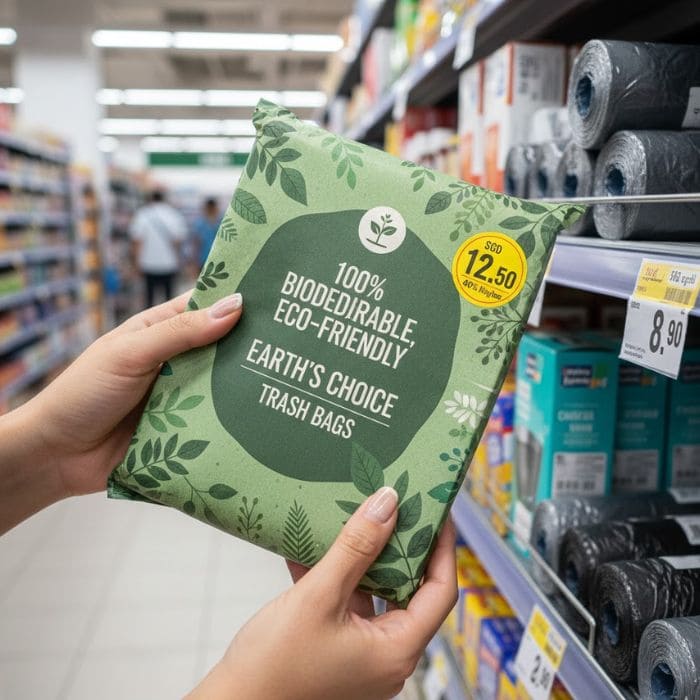
Some days ago, while doing my usual grocery shopping, I picked up a package of trash bags labeled “100% biodegradable, eco-friendly.”
The packaging was green, covered with leaves and soft colors, and priced about 40% higher than the regular trash bags next to it. Without thinking too much, I put it in my cart, feeling quietly proud of myself.
Later that evening, curiosity pushed me to read the fine print more carefully. What I found was not reassuring.
The bags were only biodegradable under industrial composting conditions, which do not exist in my city.
In my daily life, those bags would end up in the same landfill as regular plastic, breaking down no faster, just costing more.
That was the first moment I realized that an eco-friendly label does not always describe reality.
Eco Cleaning Products That Were Not as Clean as They Looked
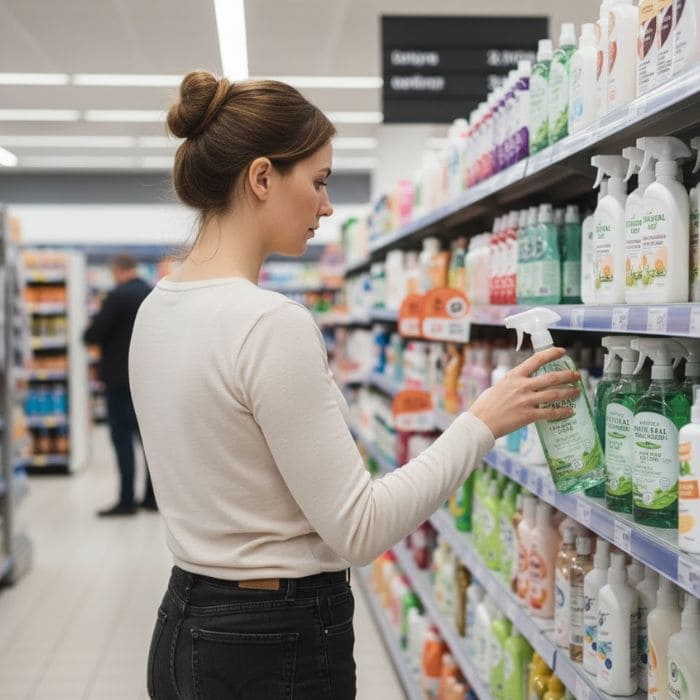
Another moment that stayed with me happened in the cleaning aisle. I picked up a bottle of surface cleaner branded as “natural,” “plant-based,” and “safe for the environment.”
The label listed botanical illustrations and soft language, but when I turned it around, the ingredient list told a different story.
The product still contained synthetic fragrances and preservatives that were no different from conventional cleaners. The difference was the story told on the front of the bottle, and the price, which was almost double.
What struck me was not anger, but disappointment. I realized how easily trust can be created through language, even when the product itself barely changes.
Why Greenwashing Works So Well on People Like Me

Greenwashing works because it targets good intentions.
When you want to live more sustainably, you are already emotionally invested in doing the right thing. That makes you more vulnerable to comforting language and visual cues.
Busy lives do not leave much time for deep research while standing in a store aisle. Brands know this.
Words like “eco,” “green,” “natural,” and “planet-friendly” are not regulated strictly enough to guarantee meaning, so they float freely, suggesting responsibility without proving it.
I realized that many of my early sustainable purchases were guided by guilt and hope rather than understanding.
Fashion Was Where I Felt the Most Misled
Clothing was another area where greenwashing became obvious over time.
I bought a shirt marketed as part of a “conscious collection,” priced higher than similar items, and promoted as a better choice for the planet.
Only later did I learn that this “conscious” line represented a very small percentage of the brand’s overall production, while the rest of the business model remained unchanged.
The material blend still contained synthetic fibers, and the manufacturing transparency was vague at best.
I Stopped Buying Labels and Started Buying Less
At some point, I noticed a pattern. The more I tried to buy the right products, the more I was still buying. That was uncomfortable to admit.
I realized that greenwashing does not always push you to buy bad products.
Sometimes it simply pushes you to buy more, under the illusion of responsibility. That realization became a turning point.
Instead of searching for better labels, I started questioning consumption itself.
Actions I Took After Recognizing Greenwashing
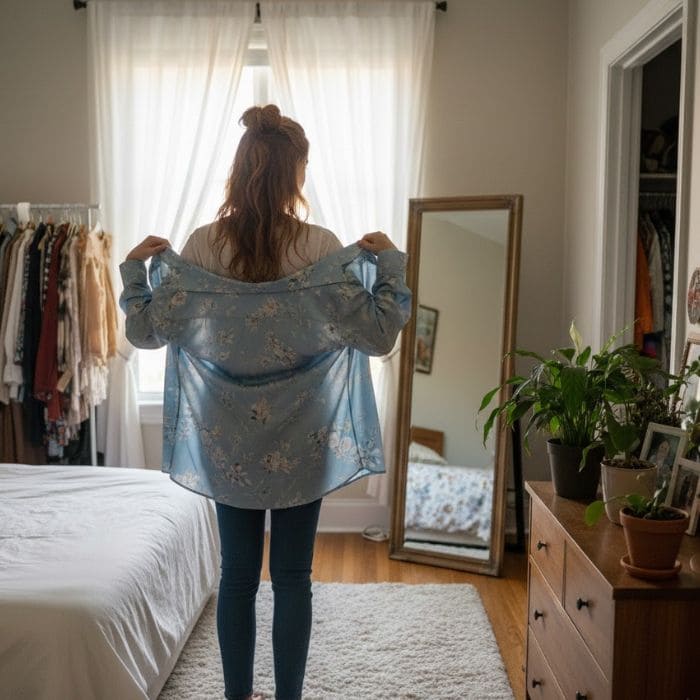
The first change I made was simple but powerful. I stopped trusting front-of-package language and started reading ingredient lists, material breakdowns, and usage instructions.
If a product required special disposal conditions that did not exist in my city, I stopped buying it.
I also stopped paying extra for vague claims. If a brand could not explain clearly what made their product better, I assumed it was not.
Another shift happened in my shopping habits. I reduced replacements.
Instead of buying a more sustainable version of something immediately, I asked myself whether the item I already owned still worked. In many cases, the most sustainable option was keeping what I had.
Learning to Sit With Imperfection
One of the hardest lessons was accepting that no product is perfectly sustainable.
Greenwashing thrives on perfection narratives, suggesting that you can shop your way into being environmentally responsible.
I learned to be more comfortable with imperfect choices, as long as they were honest ones.
Using a regular product longer often felt more responsible than constantly upgrading to something labeled green.
Now, when I see an eco-friendly label, I treat it as an invitation to ask questions rather than a guarantee.
I look for specifics instead of slogans. I pay attention to whether a company talks about durability, repair, and reduction, not just materials.
If the story focuses only on how good I should feel buying it, I pause.
Why Greenwashing Changed My Definition of Sustainable Living
Greenwashing taught me that sustainable living is not about shopping better. It is about shopping less, questioning more, and being honest about trade-offs.
Real sustainability often looks boring. It looks like using the same bottle for years, refusing replacements, and saying no to attractive packaging. It does not always look good on social media, and it rarely comes with reassuring labels.
Conclusion
I no longer feel excited by eco-friendly labels. I feel curious, cautious, and calm. I trust my habits more than marketing, and I trust reduction more than replacement.
If there is one thing greenwashing taught me, it is this.
Sustainability is not something you buy. It is something you practice, quietly, imperfectly, and consistently, long after the labels stop feeling convincing.