I Love Eating at Local Markets More Than Hotel Restaurants
I used to believe that eating well while traveling meant sitting down in hotel restaurants, scanning polished menus, and paying for comfort, cleanliness, and convenience. It felt safe, predictable, and somehow appropriate, especially after a long flight or a full day of walking. I did it often, not because the food was unforgettable, but because…
I used to believe that eating well while traveling meant sitting down in hotel restaurants, scanning polished menus, and paying for comfort, cleanliness, and convenience.
It felt safe, predictable, and somehow appropriate, especially after a long flight or a full day of walking. I did it often, not because the food was unforgettable, but because it felt like the default choice.
That belief slowly changed the more I traveled, especially when I began paying closer attention to how food shaped my experience of a place, not just my budget.
Somewhere along the way, I realized that the meals I remembered most were rarely eaten under chandeliers or white tablecloths.
They were eaten standing, sitting on small plastic stools, surrounded by local voices, heat, and movement.
My First Real Market Experience in Thailand
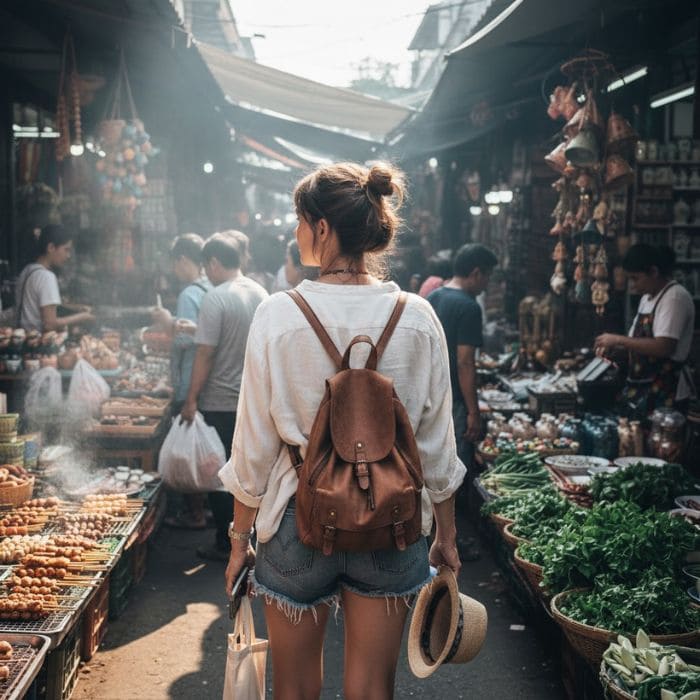
One of the most memorable experiences I had was at Chatuchak Weekend Market in Bangkok. I went there originally to browse, not to eat.
Like many travelers, I had heard of the market as a shopping destination, a place to wander, observe, and maybe buy a souvenir.
What I did not expect was how central food was to the entire experience.
As I walked deeper into the market, the smell of grilled meat, herbs, and spices followed me everywhere.
Small food stalls were tucked between clothing vendors and home goods, each one crowded with locals who clearly knew exactly where they were going. That alone was enough to change my plan for the day.
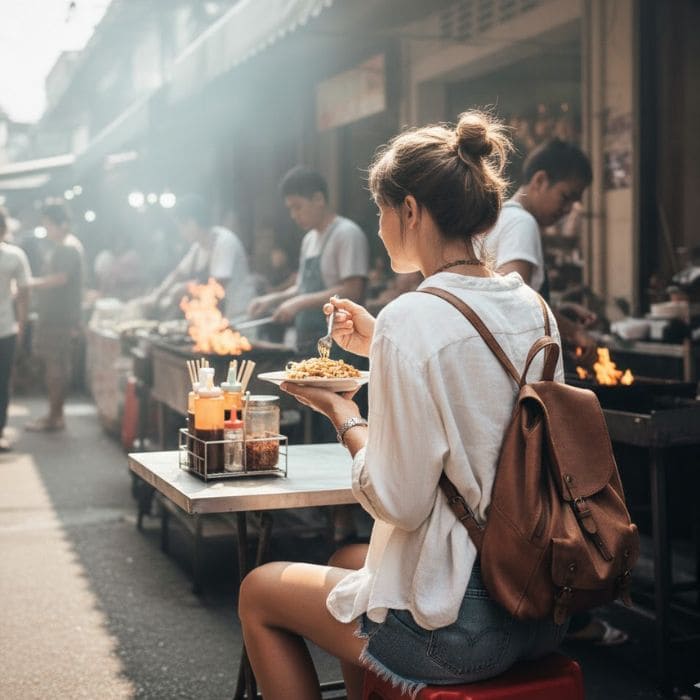
I ordered a simple plate of pad thai from a stall that had no English menu, only a short line of handwritten Thai script.
The vendor smiled, nodded, and handed me a plate within minutes. The cost was around 50 Thai baht, which at the time was less than $2.
I sat on a low plastic stool, eating slowly, watching people pass by, listening to conversations I could not understand but somehow felt part of.
The food was fresh, flavorful, and far better than what I had eaten the night before at a hotel restaurant that charged nearly $18 for a dish that felt carefully prepared but emotionally distant.
What the Market Gave Me That the Hotel Did Not
At the hotel, breakfast had been abundant, polished, and international. There were options for everyone, but none of them told me anything about where I was. I could have been anywhere in the world.
At the market, everything was local by default. The ingredients, the cooking style, the pace, and even the way people ate were deeply connected to daily life.
A Similar Experience in Taiwan That Confirmed Everything
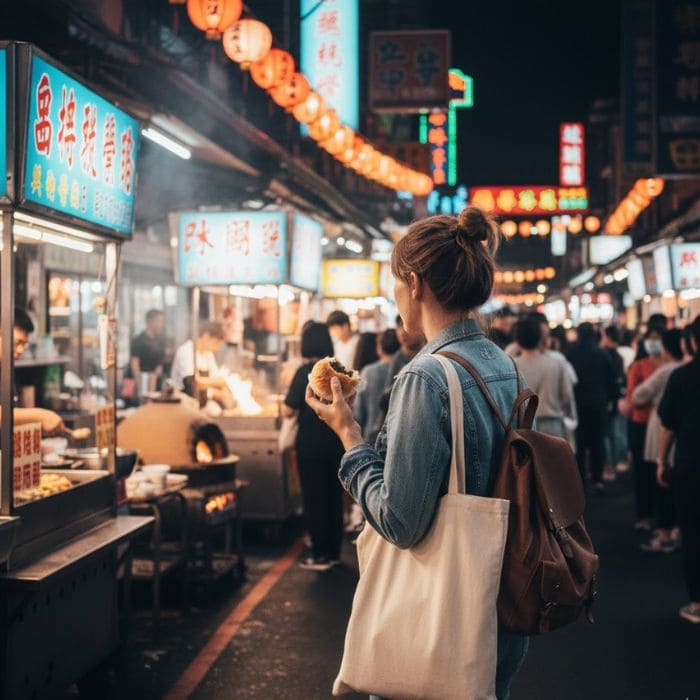
A year later, I came to Taipei, and by then, I was intentionally seeking out local markets rather than hotel dining rooms.
One evening, instead of eating at the restaurant attached to my accommodation, I went to Raohe Street Night Market, a place locals had casually recommended without much explanation.
The energy was completely different from Thailand, but the feeling was the same.
Bright lights, narrow pathways, endless stalls, and a steady flow of people moving with purpose. I followed the crowds, trusting that where locals gathered, good food would follow.
I tried pepper buns fresh from a clay oven, a bowl of beef noodle soup, and a small cup of herbal tea. Each item cost only a few dollars.
By the end of the night, I had eaten generously for around $7 to $8, a fraction of what a single main course would have cost at a hotel restaurant nearby.
Why Market Meals Feel More Memorable
Eating at local markets engages all your senses at once. You hear sizzling pans, smell spices, feel the warmth of the air, and watch food being prepared in real time.
That transparency creates trust. You see what you are eating. You see how people around you enjoy it.
Food becomes a shared experience rather than a service. Hotel meals, no matter how well executed, rarely offer that.
The Financial Difference Adds Up Quickly
The financial impact of choosing markets over hotel dining surprised me more than anything else.
In Thailand, a typical hotel dinner easily reaches $15 to $25, especially in central areas.
At the market, a full, satisfying meal often costs $2 to $4. Over a week, that difference alone saved me more than $100, without feeling like a sacrifice.
In Taiwan, the pattern was similar. Hotel or restaurant meals averaged $12 to $20, while market meals stayed under $10 for multiple dishes.
Those savings allowed me to travel longer, try more experiences, and feel less pressure around spending.
How Eating Like a Local Changed My Travel Style
Choosing markets changed how I plan my days. I walk more, I explore neighborhoods, and I travel slower. Meals become part of the journey rather than breaks from it.
I no longer schedule my days around restaurant reservations. That freedom feels deeply connected to why I travel in the first place.
When I look back on my travels, I rarely remember hotel meals clearly, they blur together and they are comfortable, but anonymous.
What I remember are moments sitting in crowded markets in Thailand and Taiwan, eating food made quickly and honestly, surrounded by people living their ordinary lives.
And that is why, whenever I travel now, local markets are no longer an alternative to hotel dining. They are the reason I travel the way I do.