Why I Separate Safety Money From Future Money
For a long time, I thought all savings were the same. Money I didn’t spend went into one place, and I told myself that was enough. I felt responsible, organized, and ahead of many people around me. But even with savings in my account, I still felt uneasy. I still hesitated before making decisions. I…
For a long time, I thought all savings were the same. Money I didn’t spend went into one place, and I told myself that was enough.
I felt responsible, organized, and ahead of many people around me.
But even with savings in my account, I still felt uneasy. I still hesitated before making decisions. I still felt pressure when unexpected expenses appeared.
It took me years to understand why. The problem was not how much I saved.
The problem was that I treated all saved money as one single thing, when in reality, money has different jobs, and when those jobs are mixed together, anxiety quietly grows.
What I Mean by Safety Money and Future Money
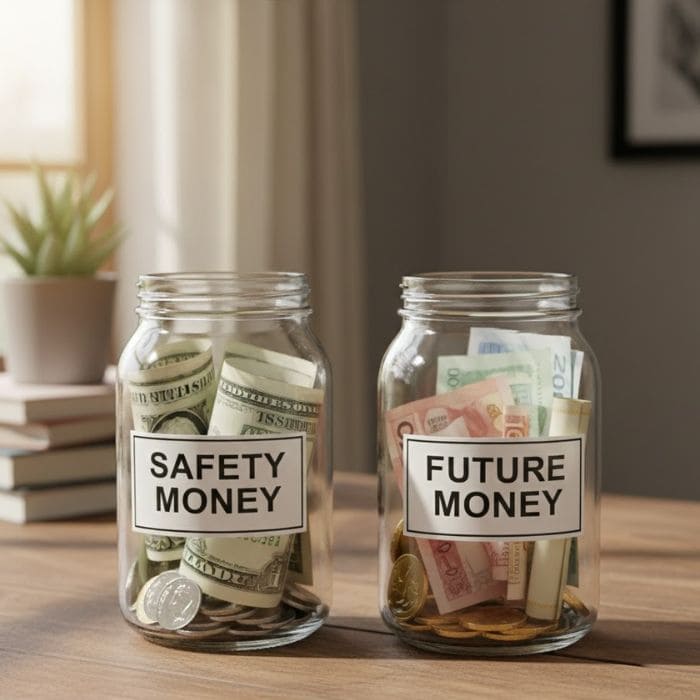
Safety money is money designed to protect your present life.
It exists to absorb shocks, unexpected events, and disruptions without forcing you into panic or debt. This is the money that allows you to sleep at night even when life becomes unpredictable.
Future money, on the other hand, is not meant to rescue you tomorrow.
It is meant to serve a version of you years from now. It is patient, long-term, and sometimes volatile. It can fluctuate, lock up for a while, or move slowly, because its job is growth, not protection.
For a long time, I mixed these two together, and it created constant internal conflict.
How I Used to Do It Wrong

Earlier in my working life, I had one savings account and one investment account, and I treated both emotionally the same.
Whenever something unexpected happened, I hesitated. Should I touch my investments? Should I drain my savings? Should I just put it on a credit card and deal with it later?
Even though I technically had enough money, I felt stuck.
I remember my laptop broke unexpectedly, and replacing it would cost around $1,800. I had that amount in my savings, but I hesitated for days.
I kept thinking about how long it took me to save that money, how it could be invested, how touching it would set me back.
Then I realized that my system was wrong. Savings should reduce stress, not create it.
The Shift That Changed Everything
I started asking myself a different question. Instead of asking how much I should save, I asked what this money is meant to protect.
That question changed my behavior completely. I decided to clearly separate my money into two categories, not just mentally, but structurally.
How I Define My Safety Money
My safety money exists for one purpose only: to keep my life stable when something goes wrong.
This includes unexpected medical expenses, sudden repairs, short-term job disruptions, urgent travel, or any expense that threatens my daily functioning or income. Safety money is not for comfort, upgrades, or long-term goals, it is for stability.
I calculated my safety money based on my essential monthly expenses. At the time, my core living costs were around $3,000 per month, including housing, utilities, food, and transportation.
I decided that six months of coverage felt psychologically safe for me, which meant a target of about $18,000.
This money sits in a place that is boring, liquid, and accessible.
Once I fully funded this safety buffer, something unexpected happened. Then I stopped worrying about small disruptions.
How I Treat Safety Money Emotionally
I do not treat my safety money as wasted potential or look at it and wish it were invested. I treat it as an insurance policy I already paid for.
When I had to use part of it for an unexpected dental expense, I felt relieved. Safety money is allowed to be used, that is its job.
How I Define My Future Money
Future money has a completely different role. This money exists for long-term growth, flexibility, and independence.
It includes retirement accounts, long-term investments, and assets that I do not plan to touch for years. It is allowed to fluctuate and to be temporarily inaccessible. It is not responsible for saving me next month.
When I finally separated future money from safety money, I stopped reacting emotionally to market movements.
A down month in investments no longer made me anxious, because my daily life was not tied to those numbers.
A Real Example of How This Separation Helped Me

There was a period when markets were volatile, and my investment accounts were down several thousand dollars on paper.
In the past, that would have made me nervous, especially if something unexpected happened at the same time. But during that period, my safety fund was fully intact.
When a minor home repair came up, costing around $900, I did not even think about my investments. I paid from my safety money calmly, knowing that my future money could recover without interference.
Why Mixing These Two Creates Anxiety
When safety money and future money are mixed, every decision feels heavy.
You hesitate to spend because you are afraid of harming your future. You hesitate to invest because you are afraid of needing the money tomorrow.
Separating these roles removes that tension. You no longer ask one pool of money to do everything.

When I save each month, I know exactly which category the money belongs to.
If my safety fund drops below my comfort level, I refill it before increasing investments. If my safety fund is healthy, future money gets priority.
I do not borrow from future money to cover present stress, and I do not invest safety money for higher returns.
What I Want Young People to Understand About This
Many young people feel financially anxious even when they are doing everything right. Often, the issue is not income or discipline, it is structure.
When you separate safety from the future, you give yourself permission to live without constant fear while still building something long-term.