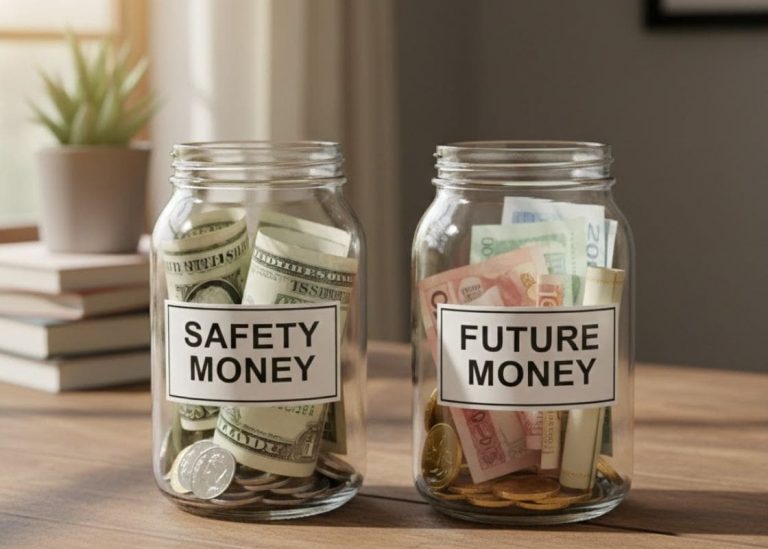
What I Do When My Salary Increases
The first time my salary increased in a noticeable way, I felt a quiet sense of relief rather than excitement. I didn’t rush to celebrate or immediately plan how to spend the extra money. Instead, I felt something closer to validation, as if my effort had finally been acknowledged. For a moment, it felt like…

The first time my salary increased in a noticeable way, I felt a quiet sense of relief rather than excitement. I didn’t rush to celebrate or immediately plan how to spend the extra money.
Instead, I felt something closer to validation, as if my effort had finally been acknowledged. For a moment, it felt like life might become easier from that point forward.
What I didn’t realize then was how quickly a salary increase can disappear if you are not intentional about what happens next.
Over the years, my income has increased several times. Sometimes the raise was modest, sometimes more meaningful. Each time taught me something different, and not all of the lessons were comfortable.
Why a Higher Salary Does Not Automatically Change Your Life

There is a common assumption that more income equals more security. In reality, a higher salary often brings higher expectations, higher spending, and sometimes even higher stress.
I’ve seen this pattern not only in my own life but also around me, especially among young professionals.
At one point, my monthly net income increased by roughly $1,000. On paper, that should have been life-changing. In practice, I barely felt it.
Rent crept up, convenience spending increased, dining out became more frequent, and subscriptions quietly multiplied.
Within a few months, the extra money was gone, absorbed by a slightly more expensive version of the same life.
The First Thing I Do: I Pause Instead of Upgrading My Life
When my salary increases now, I do nothing at first. I do not move apartments. I do not upgrade my car. I do not change my daily habits. I keep living exactly the same way for at least three to six months.
This pause allows me to see the extra income clearly instead of immediately assigning it to a new expense.
During that period, I let the additional money sit in my account. I watch how it accumulates and observe how it feels not to need it for daily life.
That observation is powerful because it reveals whether the increase is truly surplus or whether my lifestyle is already stretched.
I Separate New Money From Old Life
One of the most important habits I built is mentally separating my previous salary from my increased salary.
For example, if my net income moves from $5,000 to $6,000 per month, I continue living as if I still earn $5,000.
The additional $1,000 does not immediately belong to my lifestyle.
This separation prevents lifestyle inflation from happening automatically. Instead of asking, “What can I afford now?” I ask, “What does this extra income allow me to protect or improve long term?”
How I Decide Where the Extra Money Goes

When my monthly income increased by about $1,000, I did not assign it all to one purpose.
Roughly $500 went toward increasing my long-term savings and investments. That included retirement contributions and other low-effort, automated investments that do not require daily attention.
About $300 went toward strengthening stability. This meant building my emergency fund closer to my comfort level, not because something was wrong, but because having margin reduces anxiety.
The remaining $200 was allowed to improve my quality of life. Maybe that meant better groceries, an occasional experience I value, or slightly more flexibility in my monthly spending.
What I Refuse to Do After a Raise
There are several things I no longer do when my salary increases, even though they feel tempting.
I do not immediately upgrade my housing unless my current place genuinely no longer fits my life. Housing is the fastest way to erase a raise permanently.
I do not increase recurring expenses automatically. Subscriptions, memberships, and fixed monthly costs are treated carefully because they follow you into the future, even when income fluctuates.
I also do not treat a raise as proof that I should spend more to match my new income level. That mindset creates pressure rather than freedom.
A Mistake I Made Early On
In my earlier working years, I handled a raise poorly. My income increased, and within two months I had upgraded my lifestyle enough that my savings rate actually went down.
Then I ate out more, traveled more impulsively, and justified purchases I would have questioned before. I felt busier, not safer.
When an unexpected expense arrived later that year, I felt stressed despite earning more than ever.
It was the moment I realized that earning more without structure can make you feel poorer, not richer.
How This Approach Changed My Relationship With Money
Honestly, I no longer feel pressure to spend just because I earn more. I no longer feel trapped by fixed costs. I know that if my income changes again, up or down, my life will not collapse.
If you are young and receiving your first meaningful raise, this moment matters more than you think.
What you do now will shape your financial habits for years. You don’t need to reward yourself immediately. What you need to do is to pause, observe, and decide with intention.
Every increase in income gives you a fork in the road. One path leads to a more expensive version of the same stress. The other leads to stability, flexibility, and quiet confidence.
I choose the second path. That is what I do when my salary increases, and that is why each raise now strengthens my life instead of complicating it.