The Simple Way I Treat Kitchen Leftovers
Some weeks ago, I learnt a small tip coming from a short video I watched on YouTube late one evening after work. It was not framed as a life-changing hack. And yet, it stayed with me. I tried it once, then again, and slowly it became part of my routine. If you are trying to…
Some weeks ago, I learnt a small tip coming from a short video I watched on YouTube late one evening after work.
It was not framed as a life-changing hack. And yet, it stayed with me. I tried it once, then again, and slowly it became part of my routine.
If you are trying to move toward a more sustainable way of living, not in theory but in real life, I think this habit can be genuinely useful.
Why Kitchen Waste Was a Problem for Me
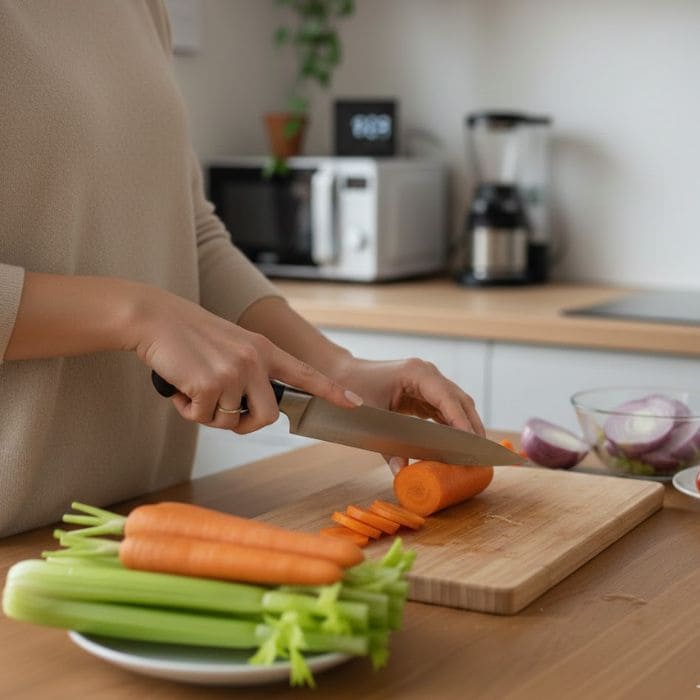
I cook often. Not elaborate meals, but regular, practical cooking that fits into a busy working life.
And like most people who cook, I generate leftovers that are not leftovers in the traditional sense such as onion skins, carrot peels, celery ends, mushroom stems, and even the parts you cut away automatically without thinking.
For a long time, I threw them out without guilt as they felt insignificant, and unusable.
But when I started paying attention, I realized how frequently this happened, and how much potential flavor and value I was discarding.
The Bag I Use and Where I Keep It
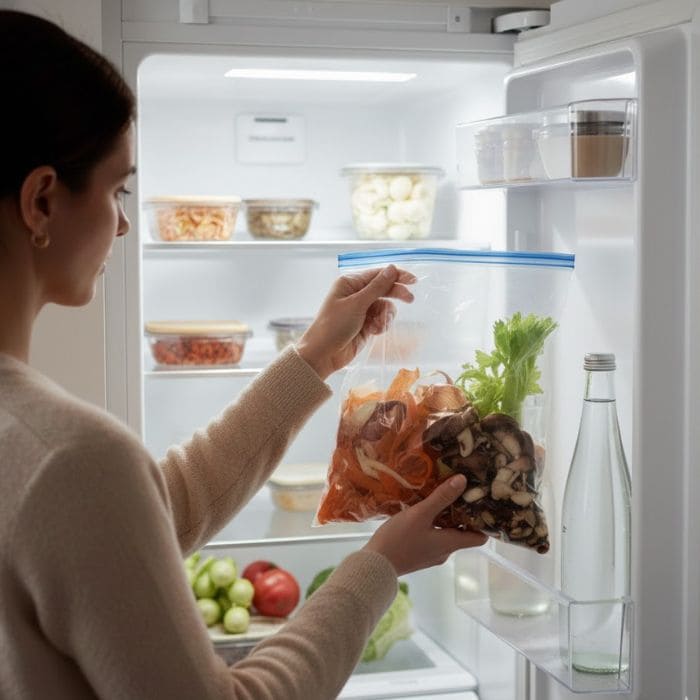
After cooking, instead of throwing vegetable scraps away, I collect them.
I use a medium-sized reusable zip bag, about 2 to 3 liters in capacity. The material matters to me.
I choose a thick, food-safe reusable bag rather than disposable plastic. These are easy to find online or in household stores, and I bought a set so I always have a clean one ready.
The bag lives in my refrigerator, usually in the lower drawer where vegetables are stored. I keep the fridge temperature around 3 to 4 degrees Celsius, which is cold enough to keep scraps fresh without freezing them.
Every time I cook, I add to the bag: onion skins, carrot peels, celery ends, mushroom stems, garlic skins and herb stems.
I avoid adding anything rotten or strongly bitter, and I do not include starchy peels like potatoes, which can cloud the broth. Gradually, the bag slowly fills.
This Method Works for My Lifestyle
What makes this method sustainable for me is that it does not require extra effort at the moment of cooking. I am already holding the scraps and I simply redirect them.
Plus, there is no pressure to use them immediately. No guilt if I cook less that week. The bag waits patiently until it is full enough to be useful.
What I Do When the Bag Is Full
Once the bag is full, usually after several days or a week depending on how much I cook, I know it is time.
I take out a medium-sized pot, something I already use regularly.
Next, I pour all the vegetable scraps into the pot and add cold water until everything is fully covered.
Honestly, I do not measure precisely, I just rely on intuition built through repetition. Then I place the pot on the stove and bring it slowly to a gentle simmer.
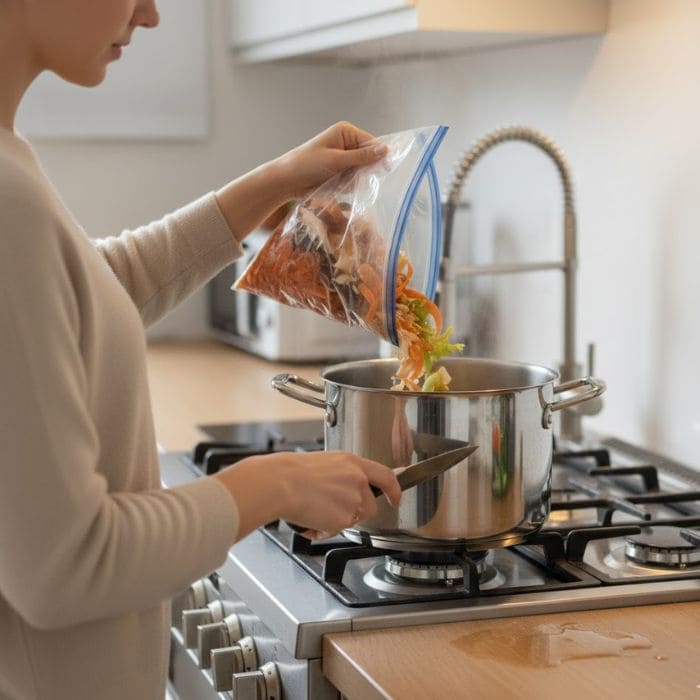
I let the scraps release their flavor slowly over 45 minutes to an hour. The smell fills my kitchen gradually. It is warm, earthy, and comforting.
The liquid turns a soft golden-brown color, not thick, not oily, but deeply aromatic. Onion skins give richness. Carrots add subtle sweetness. Celery brings balance. Mushroom stems add depth.
I do not add salt or spices. This broth is meant to be a neutral base, flexible and adaptable.
While it simmers, I do other things such as reading and cleaning lightly.
Straining and Storing the Broth
Once the simmering is done, I strain the broth through a fine sieve into a heat-safe container.
The scraps have done their job. They are now compost or waste, but they leave behind something valuable.
I let the broth cool naturally, then store it in the fridge for immediate use or freeze it in small portions for later. I usually freeze it in one-cup portions, because that is the amount I most often need.
This broth replaces store-bought vegetable stock almost entirely in my kitchen.
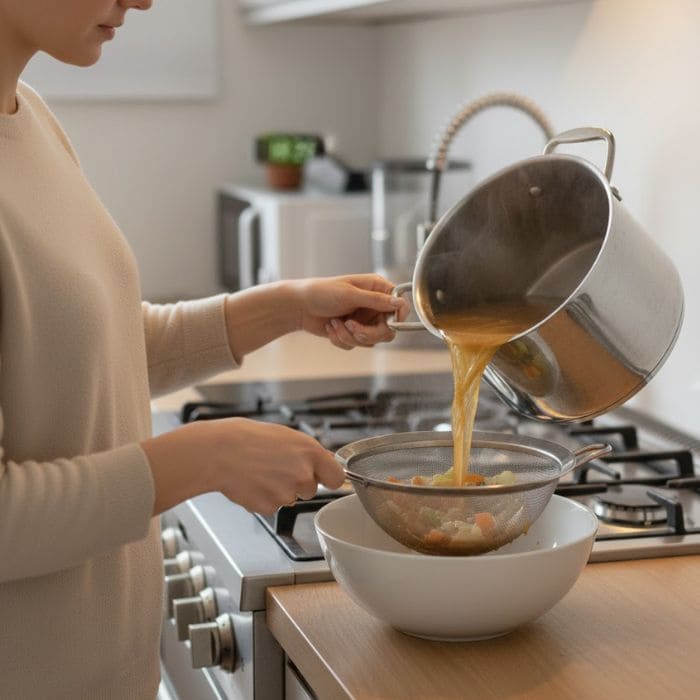
This homemade broth is incredibly versatile.
I use it for soups and stews, cooking rice or grains, sautéing vegetables instead of oil, adding depth to sauces or warming up as a light, comforting drink on cold evenings.
Because it is unsalted, it adapts to any recipe. It tastes clean and real, not overly processed.
The Financial and Environmental Impact
This habit saves me money quietly. I no longer buy vegetable stock regularly. Those cartons used to feel inexpensive, but over time they added up.
More importantly, it reduces food waste in a way that feels manageable.
Since adopting this habit, I cook differently. I pay more attention to ingredients. I feel more connected to the process. Cooking feels less transactional and more intentional.
It also gave me a sense of continuity. Scraps from one meal become the base for the next.