Why Traveling Well Has Nothing to Do With Luxury Hotels
For many years, I believed that traveling well meant staying in luxury hotels. Comfort, privacy, flawless service, and beautifully designed spaces felt like the reward for working hard the rest of the year. I followed that belief without questioning it, and at one point in my life, I booked a stay at the Mandarin Oriental…
For many years, I believed that traveling well meant staying in luxury hotels. Comfort, privacy, flawless service, and beautifully designed spaces felt like the reward for working hard the rest of the year.
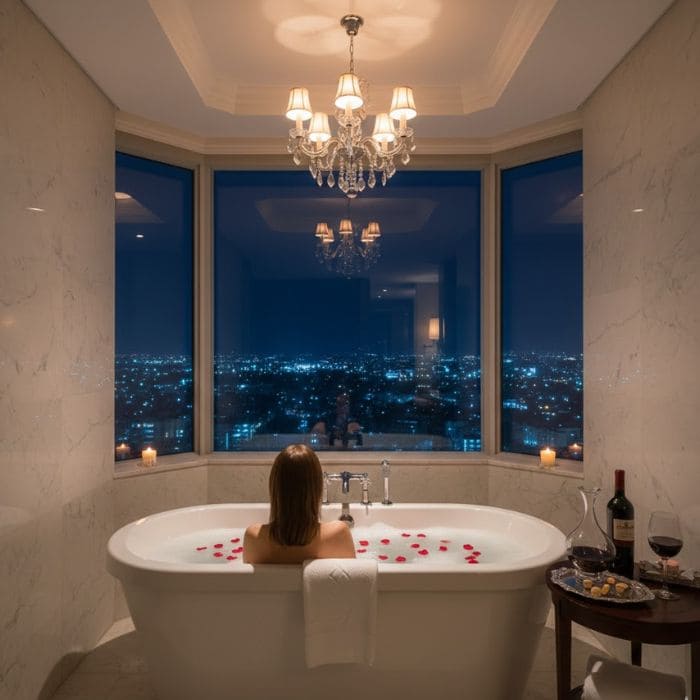
I followed that belief without questioning it, and at one point in my life, I booked a stay at the Mandarin Oriental Bangkok, where the room rate reached nearly $3,000 per night during peak season.
It was, without question, a beautiful experience. The river view was calm and cinematic, the service was flawless, and every detail felt intentional.
Breakfast was abundant, polished, and international, designed to satisfy every possible preference. I enjoyed it, and I do not deny that luxury can be deeply comfortable.
But interestingly, when I think back on my travels now, that stay is not the one I remember most clearly.
Living Both Sides of Travel Changed My Perspective
Over the years, I have traveled often enough to experience both extremes. I have stayed in five-star hotels with world-class service, and I have stayed in small homestays where the hosts knew my name by the second morning.
What surprised me was not how different these experiences were, but how differently they stayed with me afterward.
Luxury hotels are designed to protect you from inconvenience. Homestays, on the other hand, invite you into daily life.
As someone who values both meaningful experiences and thoughtful financial management, I began questioning whether luxury accommodation was actually improving my travel, or simply consuming a large portion of my budget without adding proportional value.
Staying Near Local Life in Thailand
Last year, I traveled again to Thailand, a destination where luxury and local life exist side by side.
This time, instead of booking another high-end hotel, I chose to stay in a small homestay near Bang Kachao, often called the “green lung” of Bangkok.
The place I stayed was Bangkok Tree House, located just across the river from central Bangkok but worlds away from the city’s intensity.
Where I Stayed and Why It Mattered
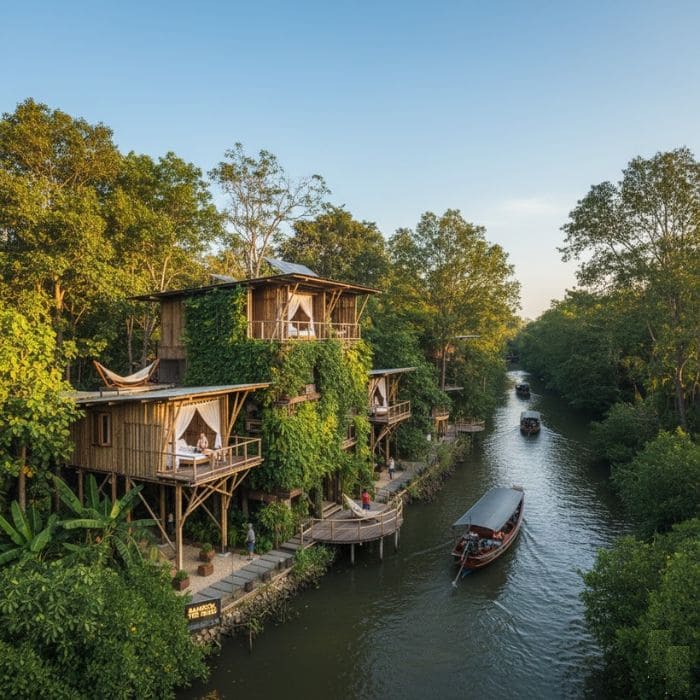
Bangkok Tree House is not luxurious in the traditional sense. The rooms are simple, open, and designed to blend into the surrounding greenery.
There are no marble floors or gold-trimmed mirrors. What it offers instead is space, calm, and connection.
The homestay sits among local neighborhoods, small markets, and quiet paths where people ride bicycles instead of cars.
In the mornings, I heard birds instead of traffic. In the evenings, the air cooled naturally without the constant hum of air conditioning.
The cost of staying there was a small fraction of what I paid for luxury hotels, yet the experience felt more layered and memorable.
Breakfast: A Small Detail That Changed Everything
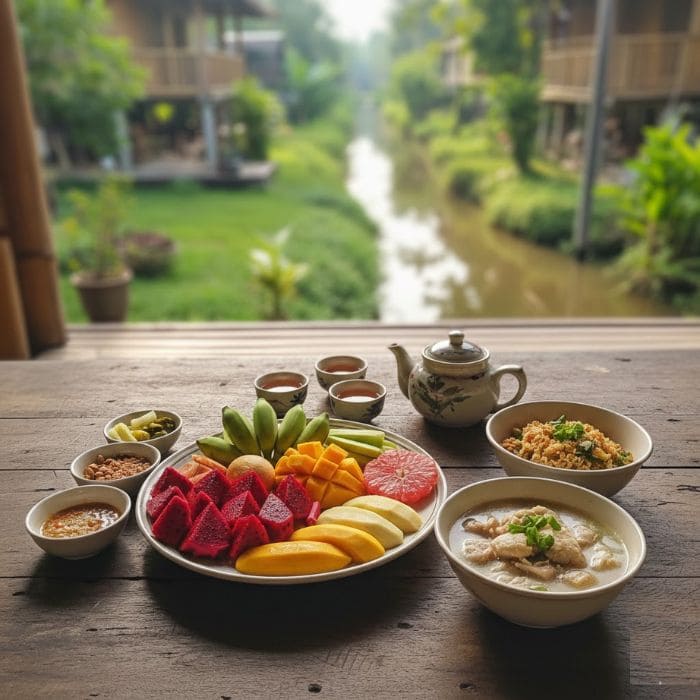
At the Mandarin Oriental, breakfast was impressive in scale. Dozens of dishes, international options, and perfect presentation. Everything was available, and yet, nothing felt personal.
At the homestay near Bang Kachao, breakfast was simple and traditional. Fresh fruit, Thai-style rice dishes, warm tea, and ingredients prepared by people who lived there. The food reflected the region, the climate, and daily habits.
I sat quietly, eating slowly, watching the light filter through trees, and realized how rarely luxury allows you to experience a place as it truly is.
Why Staying Near Local People Creates Better Experiences
When you stay near local communities, travel becomes less about consumption and more about participation.
You learn where locals eat, when markets open, and how daily routines flow. Conversations feel natural, not transactional.
This kind of experience cannot be bought with room upgrades or exclusive lounges. It requires proximity to real life.
For travelers who love meaningful experiences while staying on a budget, I strongly recommend choosing homestays or small guesthouses located near local neighborhoods, even if they are slightly removed from major tourist zones.
Practical Advice: What If You Stay Far From Local Areas?
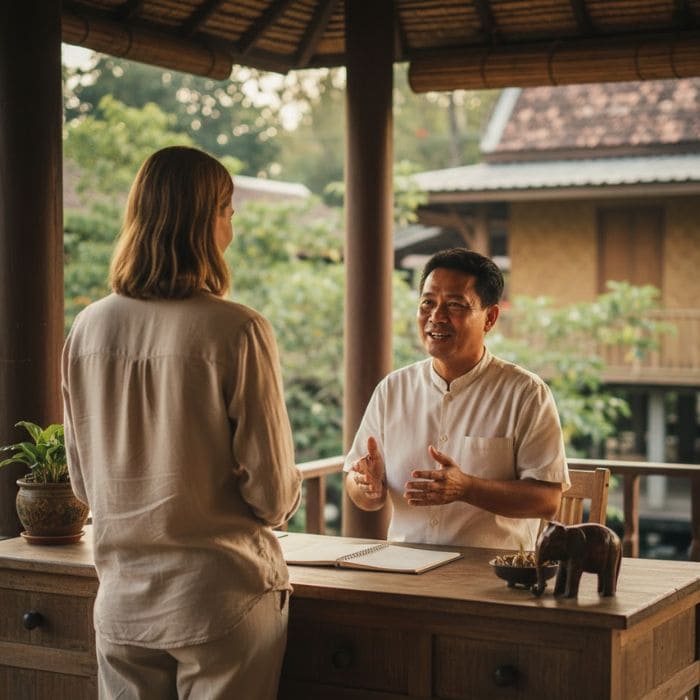
Sometimes, staying near local neighborhoods is not practical. Maybe the destination is short, maybe safety or logistics require staying in central areas, or maybe availability is limited during peak travel season.
In those cases, I always recommend talking to the hotel manager or front desk staff.
Ask where locals eat. Ask about public transportation. Ask how to avoid peak tourist pricing. These conversations often help you avoid unnecessary expenses, especially during high-demand periods when costs inflate quickly.
A five-minute conversation can save a surprising amount of money and lead to far better experiences.
Souvenirs: One Meaningful Item Per Place
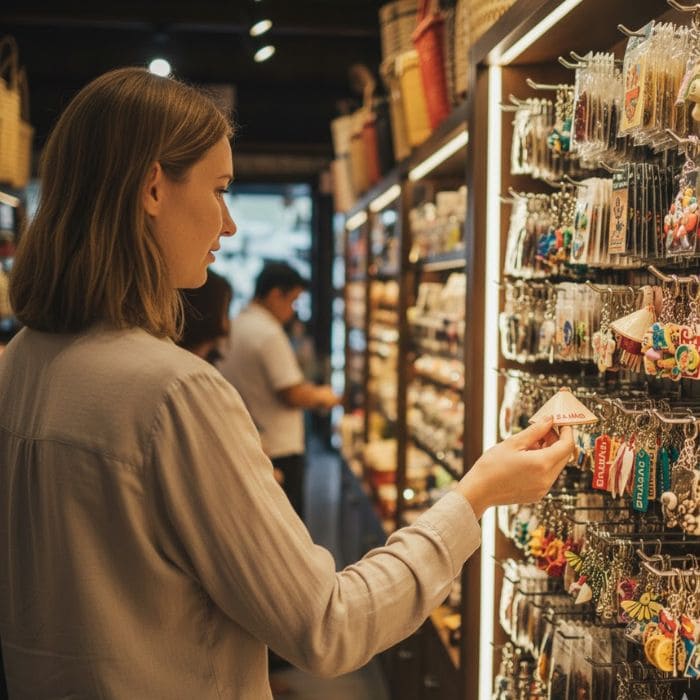
I do not shop excessively when I travel. Instead, I buy one small item per destination, something symbolic that holds memory rather than value.
For example, when I visited Da Nang, I bought a simple non la keychain, made locally and inexpensive. Every time I see it, I remember the ocean air, the street food, and the pace of that city.
That single item means more to me than bags full of souvenirs ever could.
Why This Style of Travel Fits My Financial Life
Traveling near local people aligns naturally with how I manage money. It allows me to experience depth without draining resources.
Spending $3,000 per night taught me something important, not because it was wrong, but because it showed me what truly matters to me now.
And, traveling well has nothing to do with luxury hotels.
It has everything to do with how present you are, how connected you feel, and how thoughtfully you choose where your money goes.
If you love rich experiences and still want to respect your budget, I encourage you to step outside luxury at least once.
Choose a homestay, eat local breakfast, and walk through neighborhoods where people live, not perform.
You may find, as I did, that the most valuable travel memories are not found in five-star hotels, but in quiet mornings, simple meals, and places that feel alive.